Outdoor Spaces That Don't Require Constant Maintenance
Composite Decking in Mansfield for homeowners replacing rotted wood decks or building new outdoor areas
Composite decking eliminates the annual cycle of sanding, staining, and board replacement that wood decks require. The material resists moisture absorption, insect damage, and UV fading while maintaining its surface texture and color through years of sun and rain exposure. AGC Contracting builds composite deck systems across Mansfield using hidden fasteners, proper joist spacing, and ventilation details that prevent moisture buildup underneath decking boards. These installations address situations where existing wood decks have deteriorated or where homeowners want new outdoor space without ongoing maintenance demands.
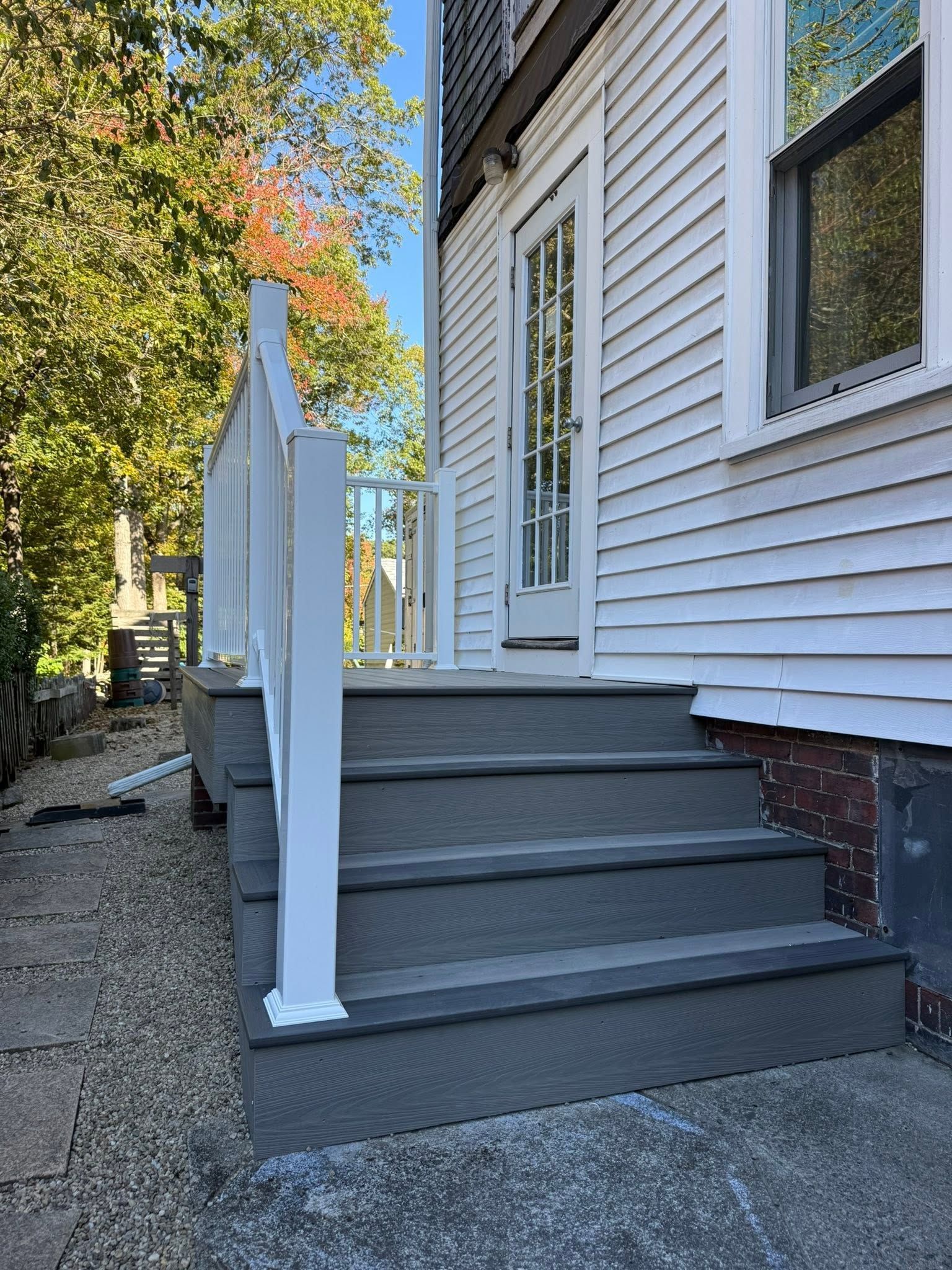
Deck construction starts with foundation footings below frost depth, followed by beam and joist framing that supports the decking surface. Composite boards install with hidden clips or grooved edges that eliminate visible screws, and fascia boards wrap the perimeter to conceal framing. Railing systems integrate with the deck structure, and stairs connect the deck surface to grade level with treads and risers sized for comfortable use.
Request a composite decking estimate to review design options and material selections.
What Differentiates Composite Deck Installation Quality
Proper installation requires correct joist spacing for the specific composite product used, adequate airflow underneath the deck to prevent mold growth, and flashing where the deck attaches to the house to stop water intrusion. Composite boards expand and contract with temperature changes more than wood, so fastener systems must allow movement without creating gaps or buckling. Railing posts anchor to framing with blocking that prevents wobble, and stairs are built to code with consistent riser heights and secure handrails.
Once finished, the deck surface stays splinter-free and maintains consistent color without fading to gray or developing mildew stains. Boards don't warp, crack, or split even after seasons of freeze-thaw cycles and summer heat. Cleaning requires only soap and water rather than pressure washing and refinishing, and furniture can sit directly on the surface without leaving rust stains or moisture marks that penetrate into the material.
Composite decking projects also involve selecting board color and texture, choosing railing style and materials, and determining whether built-in seating or planters integrate into the design. Ground preparation underneath the deck includes landscape fabric and gravel to suppress weed growth and improve drainage, and some installations incorporate lighting within railings or stair risers for nighttime visibility.
Questions About Composite Deck Projects
Composite decking offers different performance characteristics than wood, so homeowners often ask how material properties affect design and installation.
How does composite decking perform in Massachusetts weather?
Composite resists moisture absorption that causes wood to rot, and it doesn't crack or splinter during freeze-thaw cycles. Material formulations rated for cold climates resist brittleness in winter and stay dimensionally stable through seasonal temperature swings common in Mansfield.
What makes composite decking low-maintenance compared to wood?
Composite doesn't require staining, sealing, or sanding because the color is mixed throughout the material rather than applied as a surface coating. Cleaning involves occasional washing to remove pollen and dirt, but no refinishing is needed to maintain appearance or prevent deterioration.
How is composite decking attached to framing?
Most composite systems use hidden fasteners that clip into grooved board edges, creating a smooth surface without visible screws. These clips allow the thermal expansion composite undergoes while holding boards securely to joists.
What framing adjustments are required for composite versus wood decking?
Composite boards require closer joist spacing than wood decking to prevent flex underfoot—typically sixteen inches on center versus twenty-four inches for wood. Blocking between joists improves rigidity, and ventilation gaps prevent moisture accumulation that encourages mold growth on framing.
How long does a composite deck installation take?
Deck projects typically require one to two weeks depending on size and design complexity. Foundation work, framing, decking installation, railing assembly, and stair construction each take time, and weather delays extend the schedule when rain prevents concrete from curing or makes framing unsafe.
AGC Contracting designs and installs composite decks for homeowners throughout Mansfield who want durable outdoor living space. Contact (774) 266-8225 to discuss your property layout and deck preferences.